🐉 Easy Chinese Riddles for Kids
- I am a giant black-and-white animal loved around the world. 👉 A panda
- I am a legendary creature that can fly without wings. 👉 A dragon
- I am a long wall built across mountains and valleys. 👉 The Great Wall of China
- I am a round food filled with tasty ingredients and often eaten during festivals. 👉 A dumpling
- I am a drink made by steeping leaves in hot water. 👉 Tea
- I can glow in the night and decorate streets during festivals. 👉 A lantern
- I am celebrated with red decorations and family gatherings. 👉 Chinese New Year
- I have a long tail and am known for my beautiful feathers. 👉 A peacock
- I am a traditional Chinese martial art. 👉 Kung fu
- I am a popular Chinese dish made with rice. 👉 Fried rice
- I can be sweet, savory, steamed, or fried. 👉 A dumpling
- I am a famous river in China that flows through the country. 👉 The Yangtze River
- I am a famous landmark with thousands of years of history. 👉 The Great Wall
- I am the color often associated with luck and celebration in Chinese culture. 👉 Red
- I am an animal featured prominently in the Chinese zodiac. 👉 A zodiac animal
🐼 Panda Riddles
- I am black and white and love bamboo. 👉 A panda
- I am a bear but do not look like most bears. 👉 A panda
- I spend much of my day eating bamboo. 👉 A giant panda
- I have black ears, black eye patches, and a white face. 👉 A panda
- I live naturally in China. 👉 A giant panda
- I look fluffy but am a wild animal. 👉 A panda
- I can sit while eating instead of lying down. 👉 A panda
- I use my paws to hold bamboo while feeding. 👉 A panda
- I am famous for my black-and-white coat. 👉 A panda
- I am one of China’s most recognizable animals. 👉 A panda
- I can climb trees when I need to. 👉 A panda
- I look cute but have strong jaws and teeth. 👉 A panda
- I belong to the bear family. 👉 A giant panda
- I am a symbol strongly associated with China. 👉 A panda
- I am the bamboo-loving bear from the mountains of China. 👉 A giant panda
🐉 Dragon Riddles
- I have a long body but no bicycle. 👉 A dragon
- I can fly without feathers. 👉 A dragon
- I am legendary rather than an ordinary animal. 👉 A dragon
- I can appear in Chinese art and celebrations. 👉 A Chinese dragon
- I have a long, winding body. 👉 A Chinese dragon
- I am associated with power and good fortune in Chinese tradition. 👉 A Chinese dragon
- I can appear in colorful festival dances. 👉 A Chinese dragon
- I can have horns but never become a deer. 👉 A Chinese dragon
- I have no wings like a Western dragon but can still fly in traditional stories. 👉 A Chinese dragon
- I can be seen during Chinese New Year celebrations. 👉 A dragon
- I am one of the most famous creatures in Chinese mythology. 👉 A Chinese dragon
- I can appear on decorations, clothing, art, and buildings. 👉 A Chinese dragon
- I am connected with water, rain, and power in traditional Chinese culture. 👉 A Chinese dragon
- I can represent strength without being a real animal. 👉 A Chinese dragon
- I am the mythical creature that coils through Chinese legends. 👉 A Chinese dragon
🧧 Chinese New Year Riddles
- I arrive with family gatherings, food, fireworks, and decorations. 👉 Chinese New Year
- I am associated with red envelopes. 👉 Chinese New Year
- I can involve lion and dragon dances. 👉 Chinese New Year
- I am celebrated according to the traditional Chinese lunisolar calendar. 👉 Chinese New Year
- I can turn streets bright with lanterns and decorations. 👉 Chinese New Year
- I am a time for family reunions. 👉 Chinese New Year
- I can last for many days of celebration. 👉 Chinese New Year
- I often feature red decorations. 👉 Chinese New Year
- I am connected with zodiac animals. 👉 Chinese New Year
- I can include special foods for good fortune. 👉 Chinese New Year
- I am sometimes called the Spring Festival. 👉 Chinese New Year
- I begin a new lunar calendar year in traditional Chinese culture. 👉 Chinese New Year
- I can include fireworks and festive performances. 👉 Chinese New Year
- I am one of the biggest traditional celebrations in Chinese culture. 👉 Chinese New Year
- I bring families together for celebration and renewal. 👉 Chinese New Year
🏮 Chinese Lantern Riddles
- I glow at night during traditional celebrations. 👉 A Chinese lantern
- I can be red, gold, or many other colors. 👉 A lantern
- I can hang above a street. 👉 A lantern
- I can decorate a festival without being a flower. 👉 A lantern
- I can contain a light without being a lamp post. 👉 A lantern
- I can be made from paper or other materials. 👉 A lantern
- I can be round, rectangular, or decorated with patterns. 👉 A lantern
- I can brighten a night festival. 👉 A lantern
- I can have a tassel underneath. 👉 A Chinese lantern
- I can carry a riddle during a traditional lantern festival. 👉 A lantern
- I can be held, hung, or displayed. 👉 A lantern
- I can shine without being a star. 👉 A lantern
- I am a colorful light often associated with Chinese festivals. 👉 A lantern
- I can make a dark street look festive. 👉 A lantern
- I am the glowing decoration behind many traditional riddle games. 👉 A lantern
🏮 Chinese Lantern Festival Riddles
- I happen after the Spring Festival celebrations and feature lanterns. 👉 The Lantern Festival
- I can include lantern displays and riddles. 👉 The Lantern Festival
- I am traditionally associated with the fifteenth day of the first month of the Chinese calendar. 👉 The Lantern Festival
- I can include eating sweet rice balls. 👉 The Lantern Festival
- I light up the night with colorful decorations. 👉 The Lantern Festival
- I bring people together to solve riddles written on lanterns. 👉 The Lantern Festival
- I am known in Chinese as Yuanxiao Festival in traditional contexts. 👉 The Lantern Festival
- I can include lion and dragon dances. 👉 The Lantern Festival
- I mark an important point near the end of the Chinese New Year celebration period. 👉 The Lantern Festival
- I turn riddles into part of a festive night. 👉 The Lantern Festival
🥟 Chinese Food Riddles
- I am a small bundle of dough filled with meat or vegetables. 👉 A dumpling
- I am made from rice and can be steamed or fried. 👉 Rice
- I am a famous noodle dish. 👉 Noodles
- I am a green vegetable often used in Chinese cooking. 👉 Bok choy
- I am a sweet or savory pastry sometimes served during festivals. 👉 A mooncake
- I am a round food eaten during the Lantern Festival. 👉 Tangyuan
- I can be steamed in a bamboo basket. 👉 Dim sum
- I am made from fermented tea leaves. 👉 Tea
- I can be stir-fried in a wok. 👉 Chinese food
- I can be filled, folded, and steamed. 👉 A dumpling
- I can be long and symbolic of longevity. 👉 Noodles
- I can be served with soy sauce. 👉 Many Chinese dishes
- I can be crunchy outside and filled inside. 👉 A spring roll
- I can be a sweet moon-shaped festival pastry. 👉 A mooncake
- I am one of the world’s best-known cuisines. 👉 Chinese cuisine
🥟 Dumpling Riddles
- I have a filling but never tell secrets. 👉 A dumpling
- I can be steamed, boiled, or fried. 👉 A dumpling
- I have a wrapper but am not a gift. 👉 A dumpling
- I can contain meat or vegetables. 👉 A dumpling
- I can be shaped by folding dough. 👉 A dumpling
- I can be served with dipping sauce. 👉 A dumpling
- I can be small but very filling. 👉 A dumpling
- I can have many different shapes and fillings. 👉 A dumpling
- I can be eaten during festivals and family meals. 👉 A dumpling
- I can be handmade in a kitchen. 👉 A dumpling
- I can be boiled in water without becoming soup. 👉 A dumpling
- I can be steamed in a bamboo basket. 👉 A dumpling
- I have a delicious secret hidden inside my wrapper. 👉 A dumpling
- I am folded food with a tasty surprise in the middle. 👉 A dumpling
- I am the little package that people love to eat. 👉 A dumpling
🍵 Chinese Tea Riddles
- I am made from leaves and hot water. 👉 Tea
- I can be green, black, white, or oolong. 👉 Tea
- I can be served in a small cup. 👉 Tea
- I can be poured from a teapot. 👉 Tea
- I have been important in Chinese culture for centuries. 👉 Tea
- I can have a delicate aroma. 👉 Tea
- I can be brewed more than once depending on the type. 👉 Tea
- I can be enjoyed hot without being soup. 👉 Tea
- I come from the tea plant. 👉 Tea
- I can be served during a traditional tea ceremony. 👉 Tea
- I can have floral, grassy, roasted, or fruity notes. 👉 Tea
- I begin as leaves but end up in a cup. 👉 Tea
- I am famous around the world but have deep roots in Chinese culture. 👉 Tea
- I can be poured gently from a small pot. 👉 Tea
- I am the warm drink that can turn leaves into a cultural tradition. 👉 Tea
🍵 Tea Ceremony Riddles
- I involve carefully preparing and serving tea. 👉 A tea ceremony
- I can emphasize patience, respect, and attention. 👉 A tea ceremony
- I can involve small cups and a teapot. 👉 A tea ceremony
- I turn drinking tea into a cultural experience. 👉 A tea ceremony
- I can include repeated brewing and careful pouring. 👉 A tea ceremony
- I can be associated with Chinese hospitality. 👉 A tea ceremony
- I can happen quietly around a tea table. 👉 A tea ceremony
- I involve leaves, water, cups, and tradition. 👉 A tea ceremony
- I can be performed for guests. 👉 A tea ceremony
- I make a simple cup of tea feel special. 👉 A tea ceremony
🏯 Chinese Temple and Architecture Riddles
- I have curved roofs and can be found in traditional Chinese architecture. 👉 A Chinese building
- I can have red pillars and decorative roofs. 👉 Traditional Chinese architecture
- I can be a place of worship. 👉 A temple
- I can have beautiful gardens and courtyards. 👉 A Chinese temple
- I can contain statues and traditional decorations. 👉 A temple
- I can have a pagoda with several levels. 👉 A pagoda
- I can rise high while becoming narrower toward the top. 👉 A pagoda
- I can be used as a landmark in traditional Chinese landscapes. 👉 A pagoda
- I can have ornate roofs stacked above one another. 👉 A pagoda
- I am an architectural symbol associated with East Asia. 👉 A pagoda
🏯 Great Wall Riddles
- I stretch across mountains and valleys. 👉 The Great Wall of China
- I am one of China’s most famous landmarks. 👉 The Great Wall
- I have walls but never surround a single room. 👉 The Great Wall
- I have watchtowers but never watch television. 👉 The Great Wall
- I can be seen winding over hills. 👉 The Great Wall
- I was built over many centuries and dynasties. 👉 The Great Wall
- I have thousands of steps in some sections. 👉 The Great Wall
- I am made from different materials in different sections. 👉 The Great Wall
- I helped defend territories in ancient China. 👉 The Great Wall
- I am one of the world’s most recognizable historic structures. 👉 The Great Wall
- I have towers but never hold a modern office. 👉 The Great Wall
- I stretch long distances but never move. 👉 The Great Wall
- I climb mountains without having legs. 👉 The Great Wall
- I look like a giant stone dragon across the landscape. 👉 The Great Wall
- I am China’s famous wall that became a global symbol. 👉 The Great Wall of China
🐲 Chinese Zodiac Riddles
- I am one of twelve animals in a traditional cycle. 👉 A Chinese zodiac animal
- I can be a Rat, Ox, Tiger, Rabbit, Dragon, Snake, Horse, Goat, Monkey, Rooster, Dog, or Pig. 👉 Chinese zodiac
- I repeat in a twelve-year cycle. 👉 The Chinese zodiac
- I can determine the animal associated with a traditional birth year. 👉 The Chinese zodiac
- I am a dragon but not a real animal. 👉 The Dragon sign
- I am a tiger but do not live in a zoo. 👉 The Tiger sign
- I am a rabbit but appear on a calendar. 👉 The Rabbit sign
- I am one of twelve traditional animal symbols. 👉 A zodiac animal
- I can be used to discuss traditional personality associations. 👉 The Chinese zodiac
- I create a repeating cycle through twelve animals. 👉 The Chinese zodiac
- I can include a snake without being a wildlife chart. 👉 The Snake sign
- I can include a horse without being a stable. 👉 The Horse sign
- I can include a monkey without a jungle. 👉 The Monkey sign
- I can include a rooster without a farm. 👉 The Rooster sign
- I am the traditional animal cycle famous around the world. 👉 The Chinese zodiac
🐯 Chinese Zodiac Animal Riddles
- I am the first animal in the Chinese zodiac. 👉 Rat
- I am the second animal in the Chinese zodiac. 👉 Ox
- I am the third animal. 👉 Tiger
- I am the fourth animal. 👉 Rabbit
- I am the fifth animal. 👉 Dragon
- I am the sixth animal. 👉 Snake
- I am the seventh animal. 👉 Horse
- I am the eighth animal. 👉 Goat
- I am the ninth animal. 👉 Monkey
- I am the tenth animal. 👉 Rooster
- I am the eleventh animal. 👉 Dog
- I am the twelfth animal. 👉 Pig
- I am the only mythical animal in the standard zodiac cycle. 👉 Dragon
- I am associated with cleverness in traditional zodiac stories. 👉 Rat
- I am associated with strength in traditional zodiac symbolism. 👉 Ox
🏮 Chinese Culture Riddles
- I am red and often used during celebrations. 👉 Red
- I can contain a lucky gift of money. 👉 A red envelope
- I can hang outside during a festival. 👉 A lantern
- I can be a traditional Chinese martial art. 👉 Kung fu
- I can involve carefully brewed tea. 👉 A tea ceremony
- I can be a decorated paper cutout. 👉 Chinese paper cutting
- I can be worn during traditional celebrations. 👉 Traditional Chinese clothing
- I can be celebrated with dragon dances. 👉 Chinese New Year
- I can involve lion dances. 👉 A Chinese festival
- I can be a symbolic animal on a festival decoration. 👉 A dragon
- I can be a famous food made from dough and filling. 👉 A dumpling
- I can represent luck and prosperity in festive decorations. 👉 Red and gold
- I can be written with characters instead of an alphabet like English. 👉 Chinese
- I can be displayed in calligraphy. 👉 Chinese writing
- I am a collection of traditions, foods, festivals, arts, and history. 👉 Chinese culture
🧧 Red Envelope Riddles
- I am red but am not an apple. 👉 A red envelope
- I can contain money during celebrations. 👉 A red envelope
- I am often given during Chinese New Year. 👉 A red envelope
- I represent good wishes and blessings in traditional contexts. 👉 A red envelope
- I can have gold designs on me. 👉 A red envelope
- I open but am not a door. 👉 A red envelope
- I can be handed from one person to another. 👉 A red envelope
- I can contain a surprise inside. 👉 A red envelope
- I am small enough to fit in a hand. 👉 A red envelope
- I can be decorated with lucky symbols. 👉 A red envelope
😂 Funny Chinese-Themed Riddles
- I have a dragon but never breathe fire. 👉 A Chinese dragon decoration
- I have a wall but never have a living room. 👉 The Great Wall
- I have a panda but never go to a zoo. 👉 A panda illustration
- I have a cup but never drink tea. 👉 A teacup
- I have a red envelope but never send ordinary mail. 👉 A hongbao
- I have twelve animals but never run a farm. 👉 The Chinese zodiac
- I have a mooncake but never live on the Moon. 👉 A mooncake
- I have a tiger but never growl. 👉 The Tiger zodiac sign
- I have a dragon but no wings. 👉 A Chinese dragon
- I have a long wall but no neighborhood. 👉 The Great Wall
- I have lanterns but never light a street by myself. 👉 A festival
- I have noodles but never swim in them. 👉 A noodle dish
- I have a tea ceremony but no coffee. 👉 Chinese tea culture
- I have a shell but no beach. 👉 A traditional turtle decoration
- I have a rabbit but never hop away. 👉 The Rabbit zodiac sign
🧠 Hard Chinese Riddles for Teens and Adults
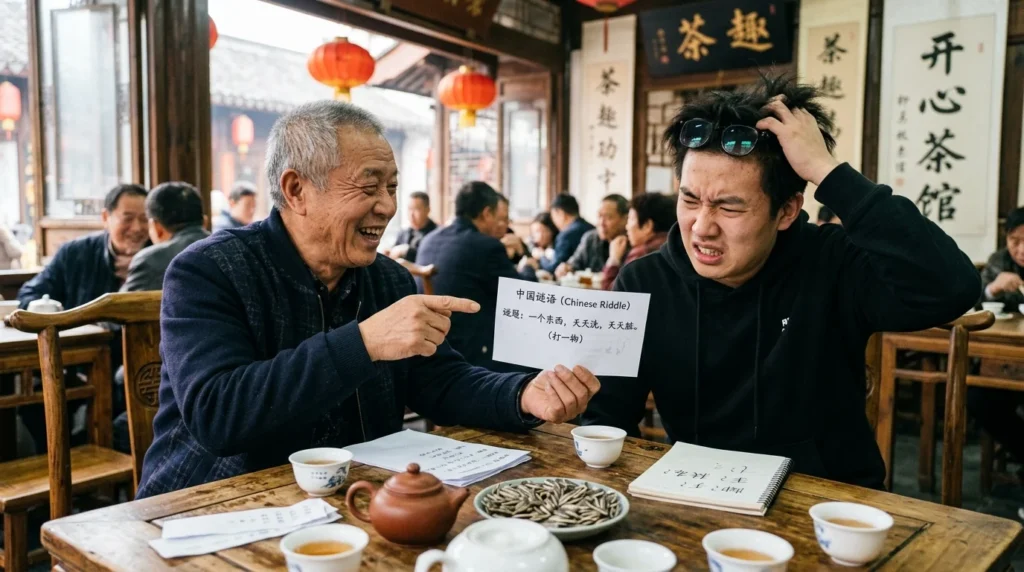
- I am a traditional Chinese riddle commonly based on wordplay involving characters, sounds, or meanings. 👉 A Chinese character riddle
- I can use the sound of one character to suggest another word. 👉 A homophonic riddle
- I can depend on the visual shape of a Chinese character. 👉 A character-based riddle
- I can be written on a lantern for people to solve during a festival. 👉 A lantern riddle
- I am a writing system based largely on characters rather than an alphabet. 👉 Chinese writing
- I can contain clues through radicals or components of a Chinese character. 👉 Character wordplay
- I can exploit multiple meanings of a Chinese word or character. 👉 Polysemy-based wordplay
- I can depend on pronunciation differences between tones. 👉 Tonal wordplay
- I can be solved by recognizing how characters combine into compounds. 👉 Chinese character puzzle
- I can be both a language puzzle and a cultural puzzle. 👉 A Chinese riddle
- I can use a character’s stroke structure as a clue. 👉 Chinese character wordplay
- I can use one character to represent a word or morpheme depending on context. 👉 Chinese character
- I can become especially challenging when a clue uses sound rather than meaning. 👉 A homophone-based riddle
- I can be traditional, humorous, poetic, or educational. 👉 A Chinese riddle
- I am the type of puzzle that makes language itself part of the mystery. 👉 A Chinese word riddle
🏫 Chinese Riddles for Teachers and Classrooms
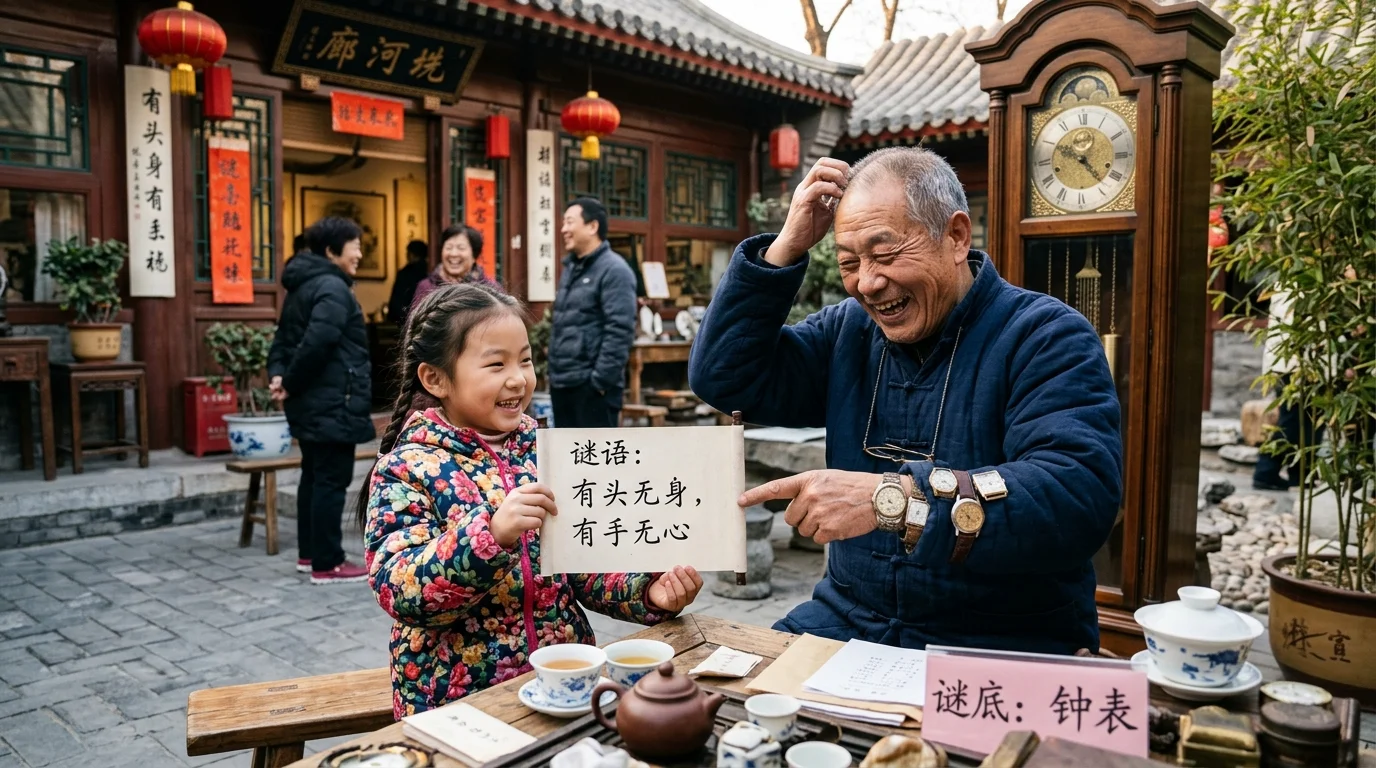
- I can turn a Chinese culture lesson into a fun guessing game. 👉 A Chinese riddle
- I can teach students words such as panda, dragon, lantern, dumpling, and tea. 👉 A Chinese vocabulary activity
- I can introduce the Chinese zodiac. 👉 A culture lesson
- I can help students explore Chinese festivals. 👉 A social studies activity
- I can become a creative writing prompt about a lantern festival. 👉 A Chinese riddle
- I can teach students about traditional foods. 👉 A culture activity
- I can introduce the Great Wall and other landmarks. 👉 A geography lesson
- I can help students learn Chinese characters through visual clues. 👉 A language activity
- I can encourage students to create cultural riddles of their own. 👉 A riddle-writing activity
- I can introduce traditional tea culture. 👉 A cultural lesson
- I can help students compare festivals around the world. 👉 A social studies activity
- I can teach respectful cultural curiosity through puzzles. 👉 A classroom activity
- I can combine language, history, geography, food, and culture. 👉 A Chinese culture activity
- I can become a classroom brain break with a cultural theme. 👉 A Chinese riddle
- I can make learning about China feel like a treasure hunt. 👉 A cultural activity
🎉 Chinese Riddles for Family Games
- I am black and white and love bamboo. 👉 A panda
- I am a legendary Chinese creature. 👉 A dragon
- I am a giant wall across mountains. 👉 The Great Wall
- I can glow during a festival. 👉 A lantern
- I can contain money and good wishes. 👉 A red envelope
- I am a traditional tea made from leaves. 👉 Chinese tea
- I can be filled with meat or vegetables. 👉 A dumpling
- I am one of twelve zodiac animals. 👉 A Chinese zodiac animal
- I can be a famous festival celebrating a new year. 👉 Chinese New Year
- I can be a sweet pastry eaten during a moon festival. 👉 A mooncake
- I can be a famous martial art. 👉 Kung fu
- I can have long noodles associated with longevity. 👉 Noodles
- I can be a famous Chinese river. 👉 The Yangtze River
- I can be a traditional form of writing. 👉 Chinese calligraphy
- I am the culture behind all these clues. 👉 Chinese culture
🔍 How to Create Your Own Chinese Riddles
Chinese-themed riddles work best when they combine culture, language, history, food, festivals, animals, and traditional symbols.
For younger children, start with recognizable subjects such as pandas, dragons, lanterns, dumplings, tea, and the Great Wall.
For older students, introduce Chinese-language wordplay involving characters, radicals, pronunciation, tones, homophones, and multiple meanings.
Traditional lantern riddles are especially useful as inspiration because the clue can be short while the answer requires careful thinking.
You can also build riddles around the Chinese zodiac. Give three clues about an animal without naming it and let readers guess which zodiac sign you mean.
For classroom activities, students can research a Chinese festival, food, landmark, or animal and create an original riddle based on accurate facts.
The best Chinese riddles should be entertaining while treating cultural references accurately and respectfully.